The Road to Papikrung starts with a bend so sharp that makes you want to reevaluate every decision that has brought you there. The mountain doesn’t simply rise. It leans asking, do you really want to? My scooty struggled uphill, but its engine remained tough and loyal. The air grew cooler as we climbed up, there’s a scatter of houses clinging to slopes.
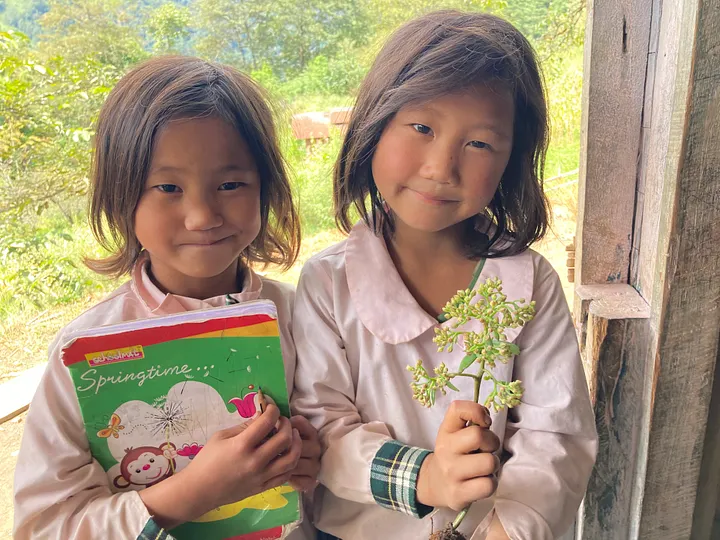
Lungte was behind me, and the rest of Shi Yomi stretched ahead like a secret daring everyone who passed by. I had come with no expectations. The first thing I saw at Papikrung wasn’t the village, it was a book, buried halfway in the slush after crossing the worst river bridge in the district. I picked it up: soaked through, wanting to be written in, yet sad with no hands to help its way out. I slipped it into the boot of my scooty and continued on.
Papikrung school stood at the edge of the slope in silence.

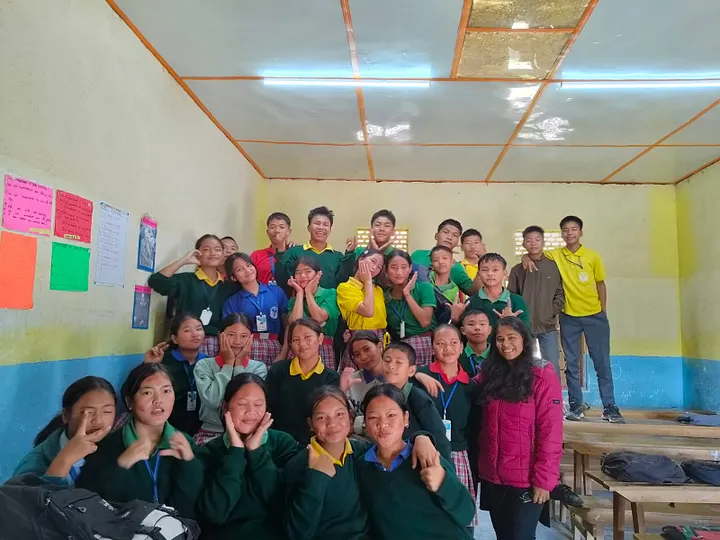
Established 50 years ago in 1975. It has watched generations grow. From barefoot children to village heads, Panchayat members, union leaders and citizens who still spoke of the old days when roads were mud and the river decided who lived or died.
A fellow colleague greeted me with a nod saying “Hi, Welcome to Papikrung.”
“You came on Scooty.” She asked like it was a Mountain Dew task.
She smiled and walked me to my room and randomly mentioned Papikrung is different. It’s not going to be like Lungte. She did not explain what she meant. Instead, she handed me a wrench pointed at the school kitchen and asked, “did you pick up the elbow joint and connector pipe? That I asked you to from Monigong”
Yes, I replied.
“Please replace it in the kitchen water tank, or we might not be able to cook dinner for school today.” She replied.
It was only then when I realised Papikrung is different. This is an unusual school.
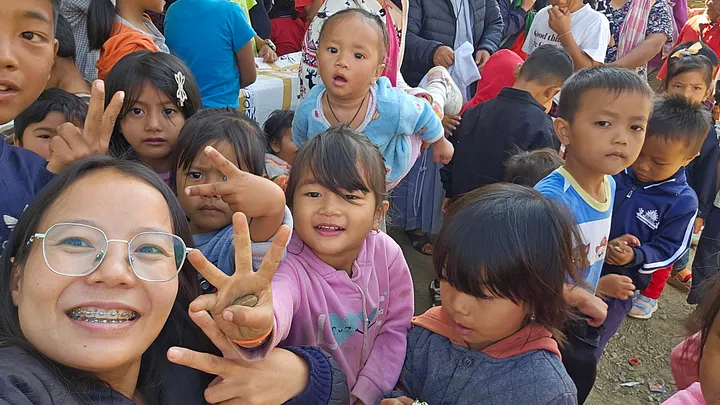
The children were staring at me, not with curiosity or excitement, but with a kind of alertness like they were waiting for someone to arrive at the school from the gate. One girl asked me while walking towards the kitchen. Can you really fix the pipe? I replied yes, I would try. While having dinner, children came with curiosity and kept asking where I was from, my name and every possible detail. Out of all the questions, one kid asked sir, “You look like someone who fixes pipes. Aaaaaa, what is it called Plumber?” I blinked and replied. “How did you know?” He simply shrugged and said “we can tell.” And everyone laughed.
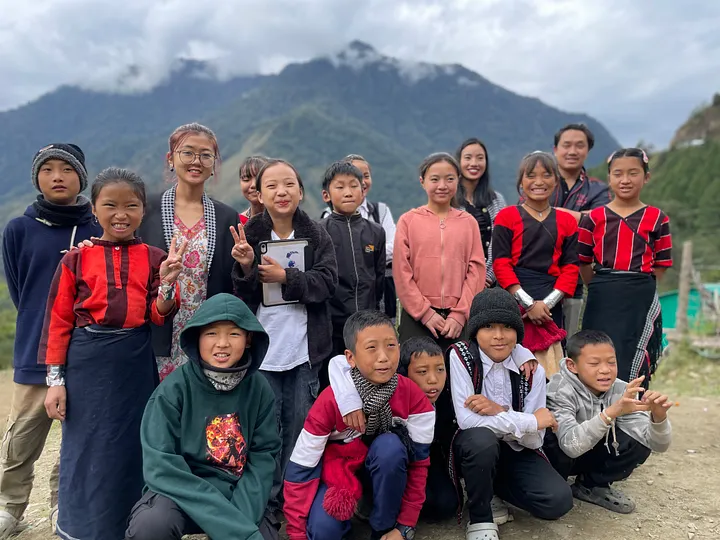
The next day among the quiet rhythm of the school, three souls moved with a light, they were interns at the school. They weren’t just helpers; they were quietly fierce guardians of children’s curiosity. Their hands were always full of chalk, paper, and games. Their eyes were always searching for that spark of wonder or mischief. Together, they formed a gentle, invisible force keeping the school alive. They never asked for credit. They only asked that the children were seen.

The days in Papikrung begin to unfold over one another.
Mornings mists with clouds filtering the day lights.
Evenings where the silence felt like an old friend, sitting beside.
I taught mathematics, but the children wanted more than just a subject. Sir. How do we use maths in real life? Sir, why don’t we build bridges over the mountains to connect? Why don’t we have electricity in the morning? Their curiosity had weight, like stones in pockets.
One day they brought me a half cut bamboo, and asked can we make a rocket out of this and the next day they wanted to see how clouds are formed.
One evening, the kids asked me to play a movie on a TV that was sitting on the table covered in dust. When I asked why it was kept like this, kids replied the power code was cut by rats and it doesn’t work now. I suggested we can try fixing this, on hearing this the kids sat in excitement and quietly as they would sit in church. I used the power cord of some other appliance and started the TV, a collective excels spread across the room, soft like Ahhhhh. I asked why they don’t look excited anymore, one girl answered, “we did not know things could be fixed.” I didn’t know what to say. Papikrung carries its own silences.
Some are peaceful, some are heavy.

One afternoon I took a walk towards Namasibo. On my way I met an old woman, who was walking to Papikrung. Her face full of wisdom-wrinkles, her sweater worn thin. Watching mountains with eyes that had seen more seasons than me. “You are a teacher at the school.” She asked, I replied, yes. “You stay in the school only, right?” she asked, staring at me with corner eyes. I replied yes, she nodded, said Kah-kah (ok in adi dialect) and looked away, I felt coldness. Same as I felt when I picked up that book on my first day, before I could talk more, she slowly started walking forward towards Papikrung, sadness crept silently, not the dramatic kind that makes you want to cry, but the slow, sliding kind that appears when you notice small truths.
A child who stops smiling. A teacher who stares too long into spaces.
A bench with names carved on, no longer spoken.
And from that silence, I kept walking.
Wandering far into the mountain’s hush, chasing errands too ordinary for the night to remember. A flicker of connection or perhaps a shadow, I carried across the curves of the mountains. Roads whispering through tires, hills that lean too close as if asking questions, I could not answer. No one knew what was gone and the night carried its secrets well.
Whispers found room, hands tapped gently on doors. Names were murmured, lost in folds of air.
Helpers moved through the dark like currents, gentle and insistent, guiding small forms through invisible and searing corridors. Masses lined themselves in shadows, quiet heads nodding in trust, and the counting began, voices called, fingers checked. Thirty-four, thirty-three, thirty-four?
A pause too long.
One never answered.
The echo remained,
Caught between memory and night.
Absence spread across the school like mist, resting on small shoulders,
filling spaces with the quiet that only night remembers.
A thin cold thread, invisible, pressing, refusing to release itself.
The trip, ordinary in light, heavy in sequence, had left a shadow that would stay in every whispered story of the children.
After the stillness, returned to the silent grounds where the time itself seemed to have withered.
Yet from beyond the gloom came a distant rise of sound soft at first, then bright.
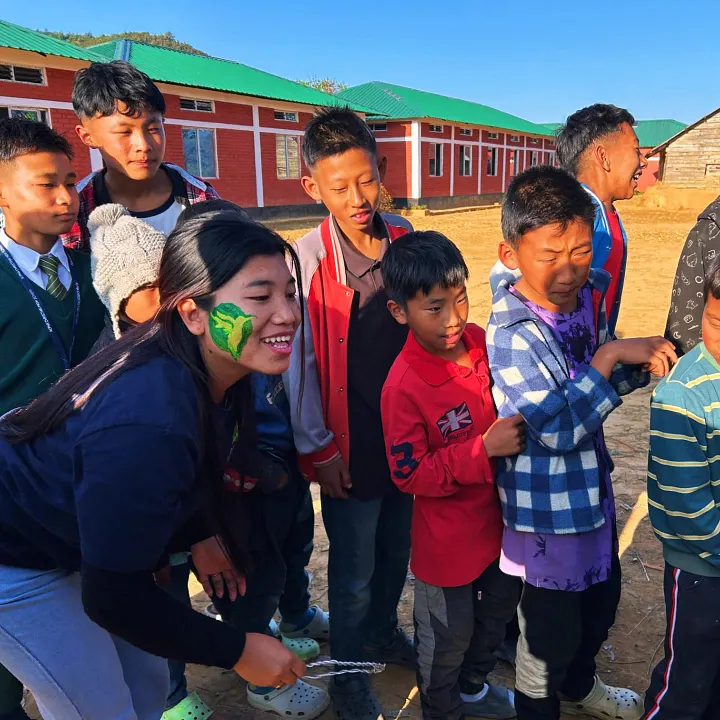
Students sending a ball through the air to helpers laughing in the scattered burst,
girls jumping the rope with a carefree rhythm.
Their joy bought a shift to the wind and the heaviness unfolded into light.
For the first time, since arriving, I felt like an outsider looking in.
One evening, a student stepped towards me. “Sir,” She whispered. “May I show you something?” From her hands she offered a small notebook untouched, neat, holding careful handwriting that wasn’t her own. She said she didn’t know whether to keep it close or to return it to Earth, unsure where such a fragile piece of someone else’s world belonged.
I said that choice rested with her, whether to let it live besides her, or
to carry it in the quiet chambers of heart, her shoulders fell slightly,
as she still makes the choice.
Papikrung continues quietly, without asking for permission, long after we leave the frame.
About the author:
Bhanuj Trivedi hails from Mumbai and works as a Lead Teacher at Sunbird Trust. With several years of experience in education, including the Teach For India Fellowship, he brings a strong blend of classroom teaching and sports-based learning. A certified football coach accredited by the All India Football Federation, Bhanuj integrates education and sports to create engaging and holistic learning experiences for students.