School Transformation Programme (STP)
Transforming Schools, Empowering Futures: School Transformation Programme (STP)


Why is School Transformation Critical?
The need for the School Transformation Programme (STP) arises from the severe educational challenges faced by schools in Northeast India. Many schools in remote and conflict-affected areas are under-resourced and lack the necessary infrastructure, qualified teachers, and effective leadership. This hinders the quality of education that students receive, limiting their future opportunities. Sunbird Trust’s STP is designed to address these challenges by focusing on holistic development – not just physical infrastructure, but also enhancing the leadership, pedagogy, and sustainability of schools. The goal is to create centers of excellence that foster learning, peace, and empowerment.
Building Centers of Excellence in Education
The School Transformation Programme (STP) is a comprehensive, long-term initiative aimed at improving the quality of education in under-resourced private schools across Northeast India.
The STP follows a 360-degree strategy that focuses on several key areas:
The STP is designed to make these schools sustainable, self-sufficient, and capable of fostering peace and unity in their communities.

Infrastructure Improvement
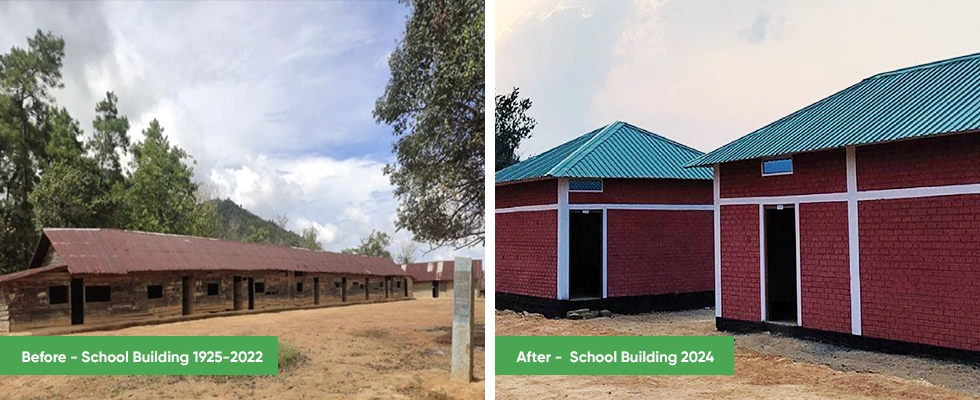
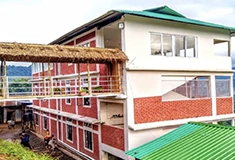
Renovating classrooms, providing learning materials, setting up libraries, science labs, and computer rooms.
School Leadership
Strengthening the management and leadership of schools, ensuring that leadership is empowering, inclusive, and focused on long-term sustainability.
Pedagogical Excellence
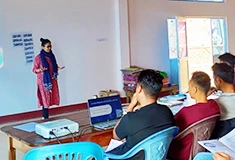
Introducing modern teaching methods, teacher training, and curriculum enhancements to ensure quality education.
Student Leadership
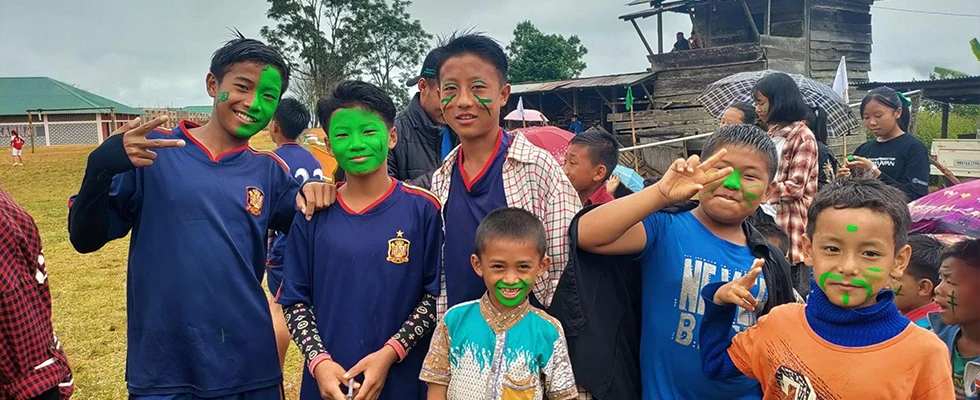
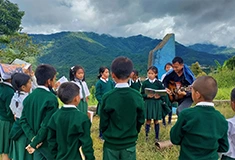
Empowering students to take leadership roles, thereby enhancing their confidence, responsibility, and engagement with the school community.
Outcomes
Outcomes of the School Transformation Programme
The STP’s success is measured across three key timeframes:
Short-term Outcomes:
Financial Stability
Schools gain access to sustainable financial models and improve their funding mechanisms.
Increased Awareness
Enhanced understanding of pedagogy and school leadership among teachers and administrators.
Improved Amenities
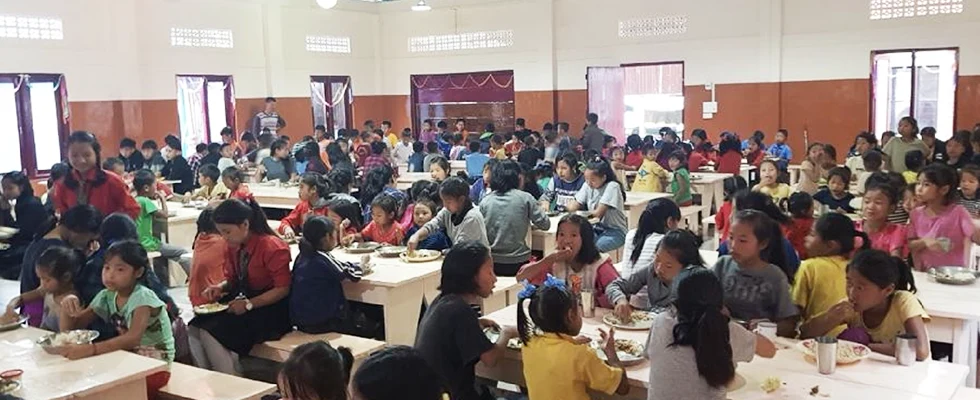
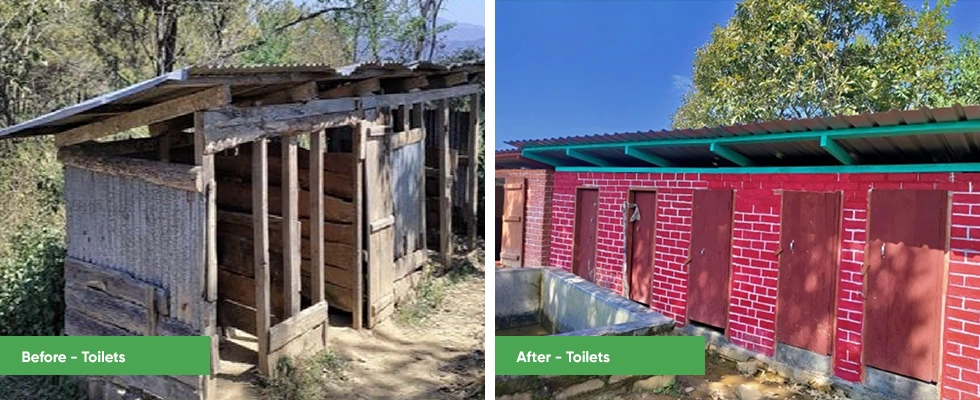
Basic facilities such as clean drinking water, functional toilets, libraries, and science labs are made accessible to students.
Increased Leadership Opportunities for Students
Students take on more leadership roles within their school, fostering a sense of responsibility.
Medium-term Outcomes:
Improved Pedagogy and Leadership Quality
Continued improvement in teaching methods and school leadership, creating a culture of excellence.
Better Utilization of Amenities
Facilities are maintained and optimally used, providing students with better learning opportunities.
Increased Autonomy for Student Leaders
Students are empowered to lead school projects and activities, promoting a culture of leadership and initiative.
Long-term Outcome:
Improved School Performance
Over time, schools show improved academic results, increased student retention, and enhanced community impact.
Impact
Sunbird Trust’s School Transformation Programme has already made a significant impact in Northeast India. To date, we have transformed nine schools, impacting thousands of students across regions such as Manipur, Nagaland, Assam, and Meghalaya.
Before and After Statistics
9
Schools
Transformed
75%
63.93%
Improvement in student academic performance
100%
improvement in school infrastructure


Support the Transformation of Schools
Donate for Infrastructure
Contribute to the construction of new classrooms, science labs, and libraries.
Sponsor School Materials
Help provide educational materials, books, and uniforms.

Join us in creating centers of excellence that will shape the future of our children and communities.
From Dilapidated to Thriving: The Transformation of Paangkriang Friendship School in Manipur
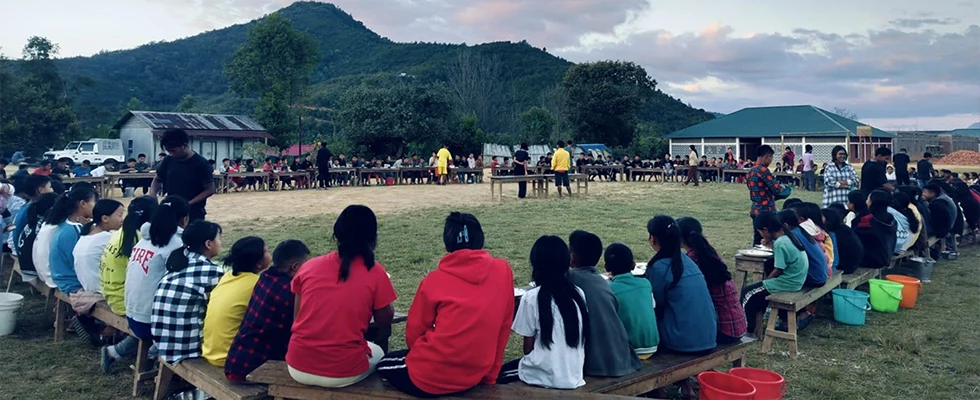
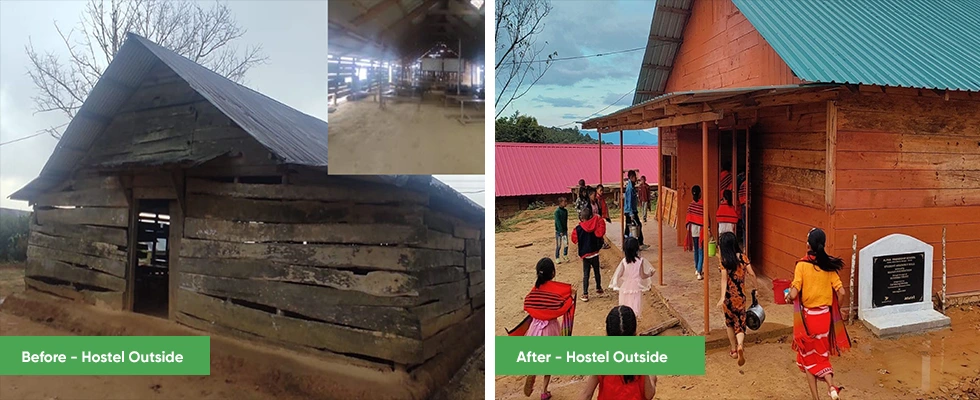
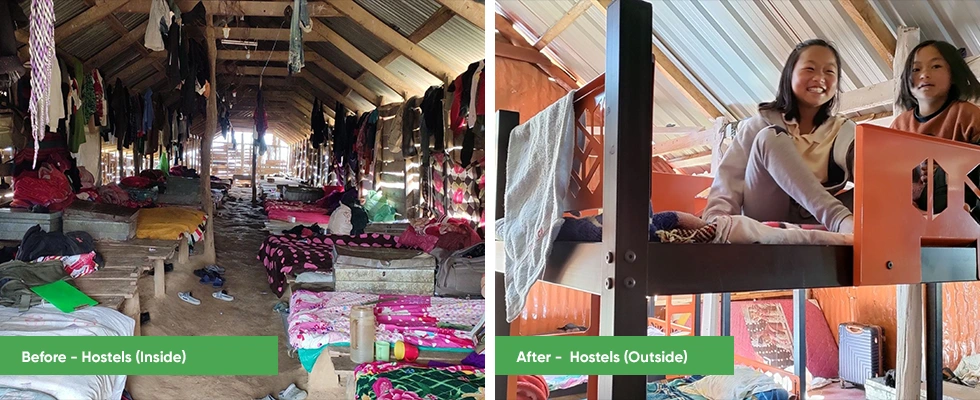
In 2015, during a visit to Paangkriang Friendship School in Noney District, Manipur, Col Chris observed students living in makeshift hostels and cooking in dilapidated sheds. Recognizing the need for improvement, the community, supported by Sunbird Trust and the local army, worked together to build a basic hostel.
This initial effort sparked gradual growth. As more students enrolled, bamboo extensions were added to accommodate them. By 2020, a brick hostel was constructed, providing a safe and comfortable environment for students to live and learn.
Today, Paangkriang Friendship School has become a hub for quality education, with increasing enrollment and an atmosphere that supports student leadership and development.
Student Leadership in Action: Empowering Youth in Alpha Friendship School
Nestled in the remote village of Kachai in Manipur, is steadily building a culture where students are not only learners in classrooms, but also active contributors to school life and decision-making. Through the School Transformation Program (STP), the school has been intentionally creating opportunities for students to take ownership, lead initiatives, and develop confidence in their voices and abilities.
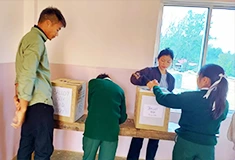
One of the strongest examples of this shift has been the growth of the Student Council system in the school. What began as a small initiative has now become a meaningful platform for student participation and leadership. Every year, the school conducts Student Council elections to give students the opportunity to experience leadership and democratic participation. This year, all students from Classes 1 to 10 participated in the voting process, while students from Classes 4 to 10 were eligible to contest elections. Through this process, students learn about representation, responsibility, and decision-making from an early age.
Student leaders take on active roles within the school. They support in conducting assemblies, coordinating school events and competitions, leading house activities, and helping maintain discipline and classroom culture. The council also acts as a bridge between students and teachers by bringing forward student ideas, concerns, and suggestions.
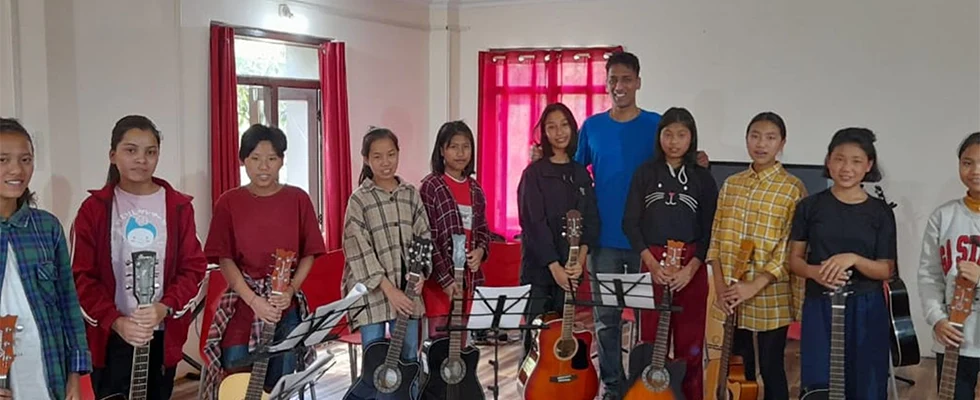
Alongside these structures, the school also focuses on the capacity building of student leaders by creating regular spaces to strengthen soft skills such as communication, teamwork, confidence, problem-solving, public speaking, and collaboration. Students are encouraged to facilitate discussions, lead group spaces, and support peer learning opportunities for one another. In many instances, students themselves take ownership of leading activities, discussions, and school spaces with guidance from teachers.
The school also believes in providing exposure opportunities that help students learn beyond the classroom. Through participation in events, celebrations, leadership responsibilities, and collaborative activities, students gain confidence in interacting with different groups of people and taking initiative in unfamiliar situations.
Beyond the Student Council, leadership opportunities are also embedded through house systems, group projects, celebrations, and shared classroom responsibilities. These experiences help students gradually build a stronger sense of agency, accountability, and ownership within the school community.
In a remote village context where students often have limited exposure to formal leadership opportunities, AFS is creating meaningful spaces for children to lead, participate, and grow into confident young individuals.