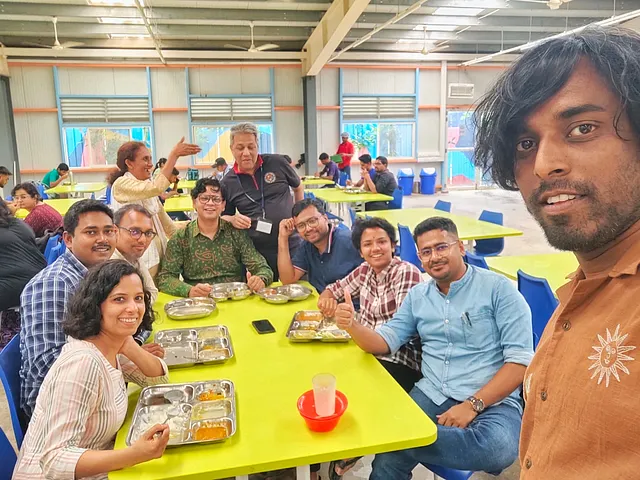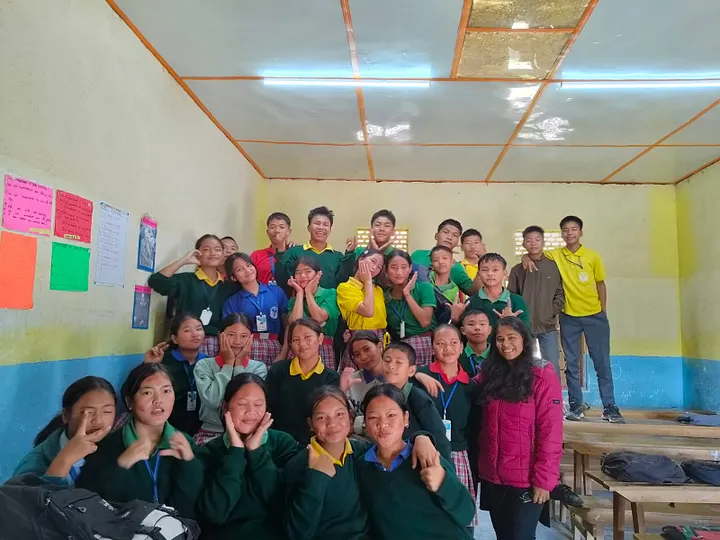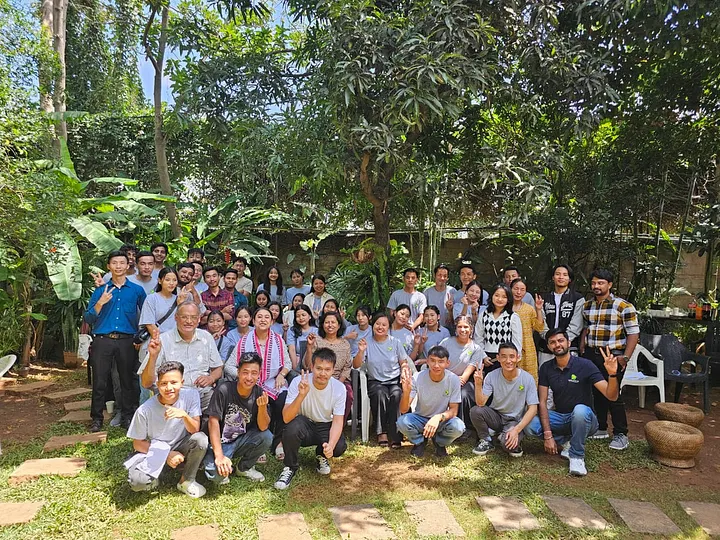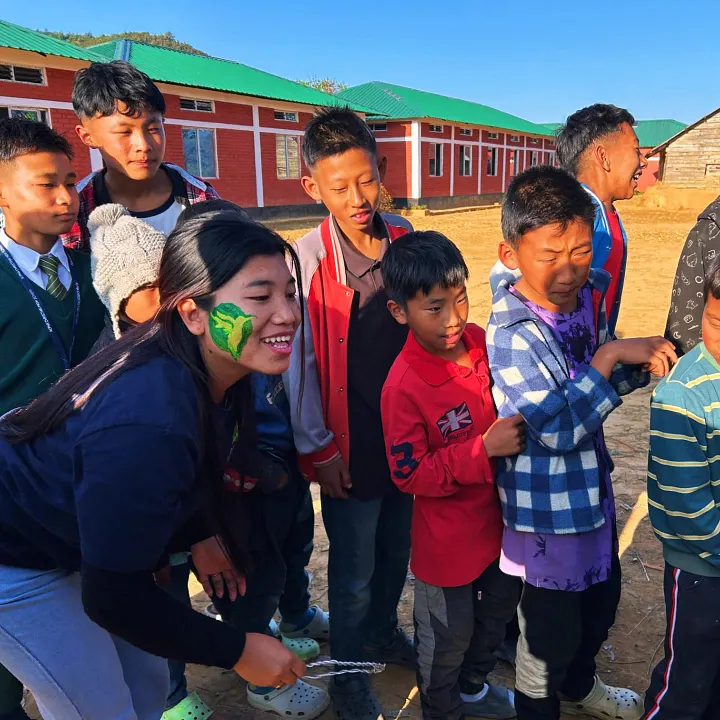
A cold February morning; the year, 2022. I woke up to the sound of someone knocking at my door. It was a villager. She was holding a basket of eggs and laipatta. “For you and Athisa ma’am,” she said. Outside, the mountains were covered in glistening white snow. “Why, it’s like a fridge inside this house!” she exclaimed. The locals always found it amusing that a girl from the south of India could survive winters here without a Bukhari (wood stove). My roommate, Athisa from Manipur, and I stayed in one of Sunbird Trust’s locations — Papikrung. You wouldn’t believe that we hiked 10 minutes uphill to reach a satellite point for 4 GBs of super slow internet monthly. That was how we stayed connected with our families. Papikrung is one of India’s most remote villages in Shi-Yomi district of Arunachal Pradesh, around 15 km from the Indo-China border.
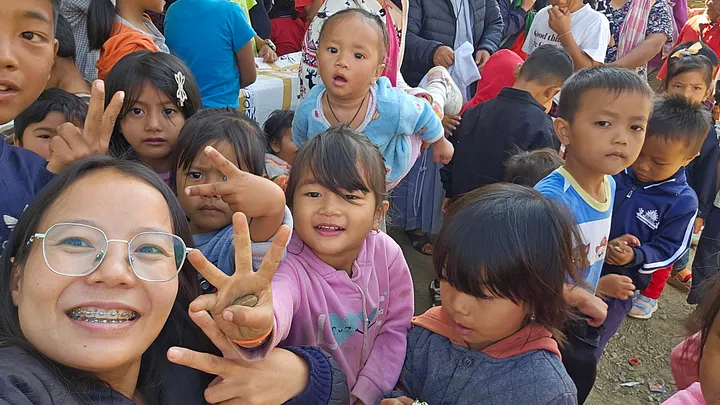
Next door, our new accommodation was under construction supported by the Army. Athisa and I dreamt of living there soon, with a heater and uninterrupted water supply. But for now, the parent handing us local produce in the morning was enough warmth. Athisa and I made our way to school: Govt Residential NSCBAV, Papikrung. When Sunbird Trust signed a 3-year MoU in 2022 with the Government of Arunachal Pradesh to take up the school in Papikrung, there were only 11 children enrolled. Slowly, as we started turning up every day, more children from the village started showing up. Initially it was to ensure they got a share of the free meals. Gradually, children came to class. Realising that school could also be “fun,” they began taking active part.
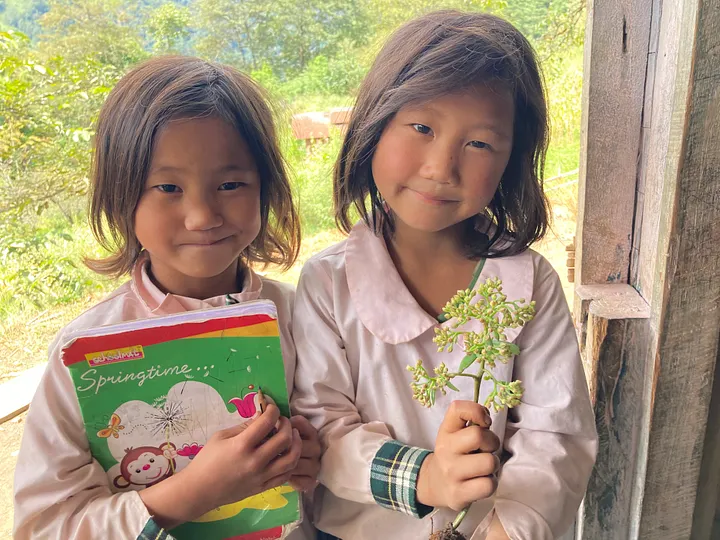
Even after so many years away from school owing to the scant functioning of the system, you wouldn’t believe the pace at which these children grasped what was taught. We started small — phonics, writing, number sense and counting. When we finally opened the textbook, things didn’t seem too daunting. A typical school day was fun both for us and the students. Two out of five govt teachers would turn up on any given day along with us. Together, we focused on foundational literacy, numeracy and a lot of dancing, music, art and theatre. The students were fascinated with telling stories.
Along with setting up academic operations, we started understanding how government systems function — school’s finance operations, managing fooding and lodging, paperwork for the department, and who’s who in the education department. Slowly, as change became visible — children sharing what they did in school, speaking English at home — the community’s trust in us grew.
I was told the walkie talkies (the only mode of communication since there was no network) would carry stories of children recounting their entire day at school to relatives in the nearest town, Monigong. We also got a lot of support from the Army. Officers from Subedar to Brigadier visited the school. Every visit was a festival — one, for the goodies they brought, and two, because students loved preparing performances and listening to their stories. I remember Yatuk, a grade 3 student, saying she and her friends used to be scared of the Army before. “Now I get so excited when I hear the army trucks coming,” she said.
This was more than three years ago. The school has seen a sea change since then. From 11 kids to 100+ (maximum capacity) now. Every year at least one grade 5 child has topped the district. Last year, three secured admission into Jawahar Navodaya Vidyalaya. This is a story that rolls easily off my tongue now at education conclaves, government meetings, and orientation calls for new team members.
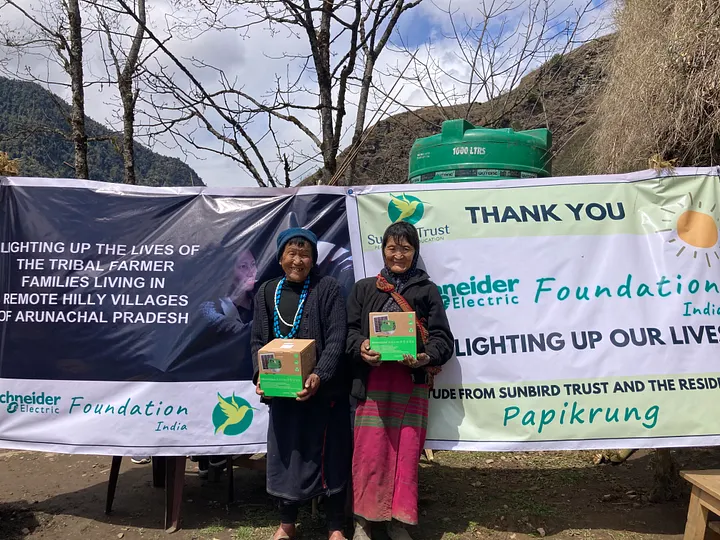
But the story doesn’t end there. It is perhaps just the seed. When the administration reached out to us to take up more schools, we sat down with our learnings to design a programmatic intervention. Our first year at Papikrung taught us so much — what works in remote spaces, what doesn’t, what it means to build something without a template. So much of the work was ad hoc and on-the-go. When we finally came down together to ideate, we needed clarity.
The needs analysis survey, the long meetings to decide structure and functioning, the manpower needed — all of it was a mammoth task. But every team call made it easier. Who knew then that what we discussed in those calls would become the foundation of one of Sunbird’s biggest programs today, supported by Axis Bank’ CSR initiative, Dil Se.
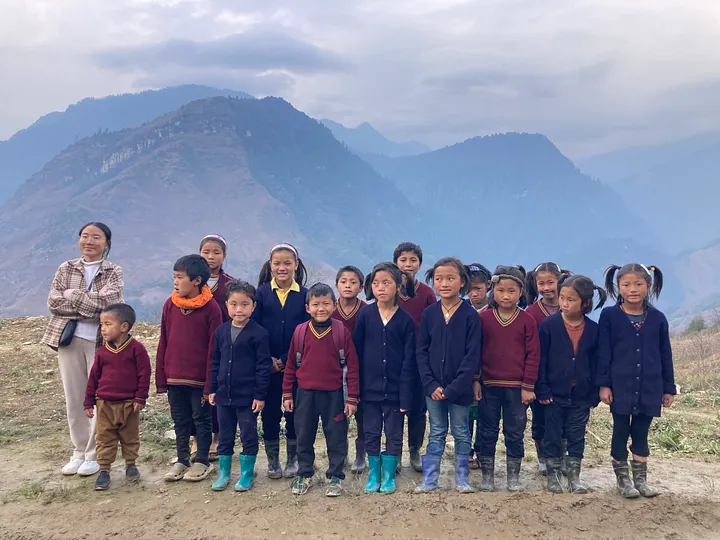
The Government School Transformation Program (GSTP) is now run across 11 schools of Shi-Yomi district. Six schools, including Papikrung, are base schools with team members stationed full-time, and five schools are spoke schools. As part of the program, Sunbird also took up an unused tourism complex in Mechuka and converted it into a teachers’ academy for educators of the Northeast.
GSTP aims to convert these near-defunct institutions into schools of excellence by strengthening infrastructure; empowering student leadership; and building capacity of govt teachers, school leaders and SMC members; and leveraging the support of the Army, department and community. Having been part of the pilot in Papikrung, the needs analysis of the district govt. schools, the program design, overseeing the GSTP implementation and now leading teacher training at the Academy has been a treasure trove of learnings. This experience has been humbling, at times daunting and at others incredibly rewarding.
A school once on the verge of shutting down after a POCSO case shattered community trust is now thriving — with an empowered school leader, trained teachers and Anganwadi workers. Teachers who earlier came only on national holidays now work hand-in-hand with our team. Children who can’t afford private schools are getting admissions into institutions like JNVs. Children starved of exposure are now visiting ISRO space labs, discovering curiosity, wonder and possibility. In many ways, we are seeing firsthand how the concerted efforts of the Department, the Armed Forces, the community can bring deeper, more sustained impact through these Public-Private-Partnerships.
We are also seeing reverse migration — parents pulling children back from private schools in nearby towns and placing their trust in their own schools again.
But all this impact has come with its fair share of challenges. Setting up six locations came with obstacles — each tribe, each village is different. Building relationships without the time Papikrung had was difficult. Recruiting for six schools and creating an environment where completely different people work together — challenging. Working with government systems on mindset change, rather than short-term student outcomes, was slow and met with resistance. Community participation was forthcoming with Papikrung. With a funded program, support carries expectations of profit. The responsibility for safety, operations, and academic functioning places a heavy burden on team members working in already unforgiving conditions.
With each step, we learned much. The program holds ripe potential. Every location with team members from different backgrounds, working in remote spaces with passion, bringing their own essence is a joy to witness. Some days it feels like a full circle — from envisioning such a program in my tiny, cold house in Papikrung to now being a team of 28, Sunbird’s largest. It has been an exercise in program design, human psychology, strategy and operations, resilience and understanding impact.
And who knows — we may be looking at the making of a District Transformation Program for more underserved districts in the Northeast.
I look back at what Chris sir says and think how much we can achieve if we internalise this maxim: “Be all that you can be.”
About the author:
Meenatchi hails from Madurai, Tamil Nadu, and leads the Teacher Training & Skilling Academy at Sunbird Trust. An alumna of the Teach For India Fellowship, her journey has taken her to Arunachal Pradesh, where she worked extensively in experiential learning, sustainability-led education, and community engagement. With a background in print journalism and a deep interest in storytelling, Meenatchi brings together education, reflection, and mindful living in her work, guided by a vision of building learning communities rooted in sustainability and collective action.