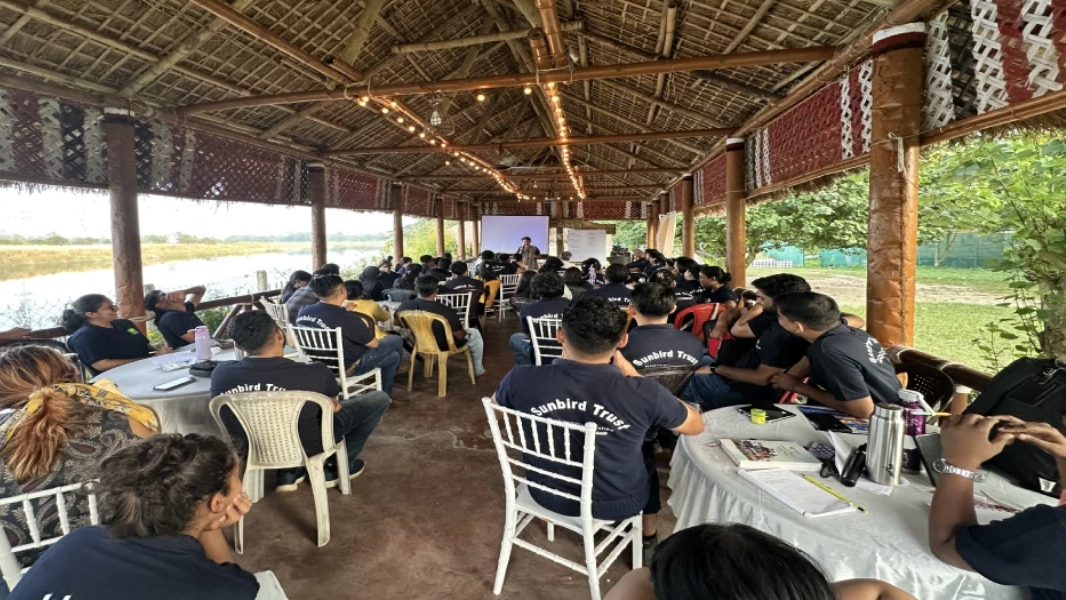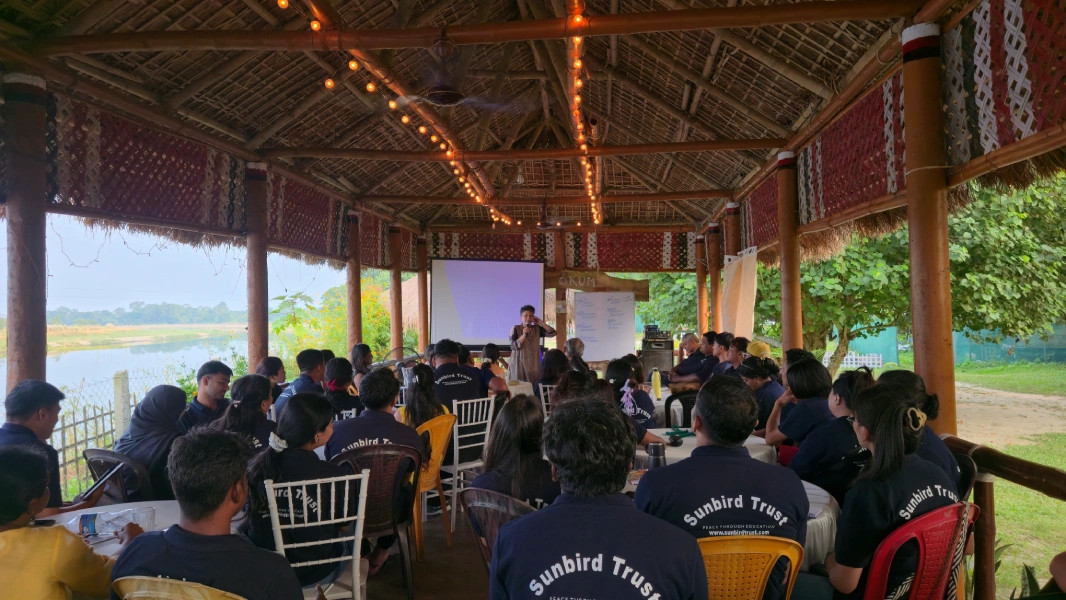
Social sector work is ripe for stories from the ground, but writing these stories can seem daunting. Many of us would want to write about the work happening on the ground, but chances are we feel untrained and unequipped to write these stories. In this context, recently as part of our annual retreat, my colleagues at Sunbird Trust and I participated in a session that demystified storytelling in the social sector.
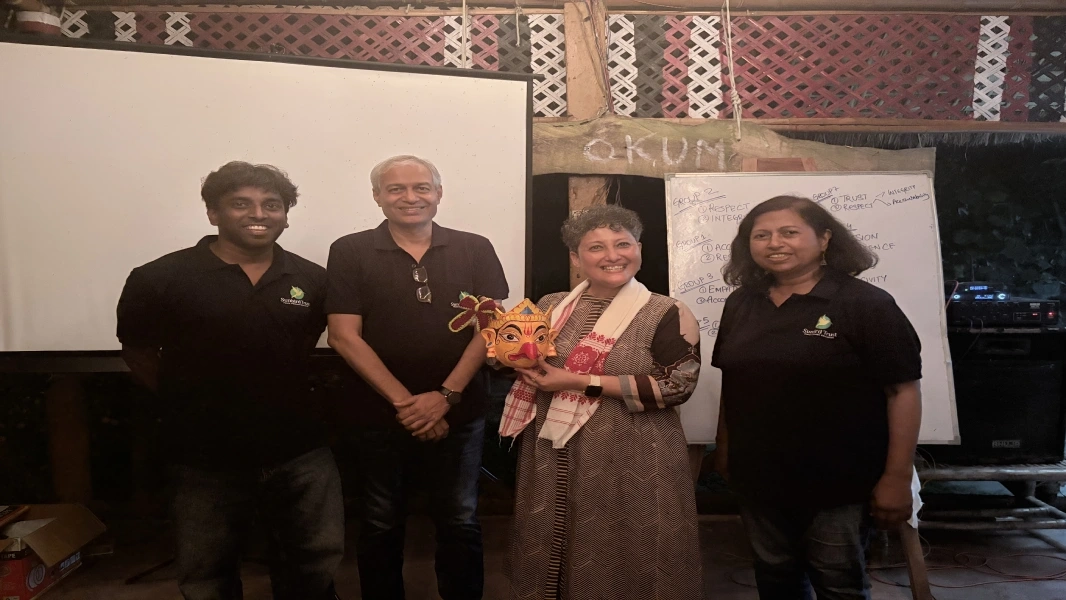
Senior journalist and author, Sangeeta Barooah Pisharoty, shared with us guidance and tips on storytelling in the social sector. It was not a hands-on workshop with participants actually practising writing a piece. Instead, it was more a lecture, though an interactive one at that. Still, I found it effective.
Sangeeta began by posing a question to the audience – which was our full team of over sixty colleagues spanning different areas of work and different experience levels. She asked: Why is storytelling important in the social sector? Different responses came in – and the dialogic nature of the session started taking shape. What emerged is that storytelling in the social sector is important because: There is a diversity of stories waiting to be told; stories better communicate the significance and impact of the work done, thanks to their emotional appeal; we are creatures of stories, we like to tell and hear stories; mainstream journalism has stopped writing social sector stories, so it is all the more important for practitioners to bring out stories; stories could help raise funds and support for the work being done.
Given that it is important to tell stories in the social sector, how exactly to do it? Sangeeta took us back to the origins of storytelling in the distant past of our species. Our ancestors would have gathered around a fire and told each other stories by first asking a fundamental question: Do you know what happened?! (Pata hain kya hua?!) This is the core point that storytelling should revolve around.
When we want to tell a story, there are two questions that could lead us: What should I tell? versus, Why should the other person know this? Sangeeta points us toward the latter. The answer to the ‘why’ question helps us determine our point of view (PoV). We should not be writing anything if we do not have a PoV to put across. And this PoV is ideally the answer to the question, ‘Pata hain kya hua?!’ It points to something that is worth knowing about; something that has changed or shifted. Without a convincing answer to this question, without a clear PoV, we do not have a story to tell.
Once we have identified a PoV, once we have identified the answer to the question ‘Pata hain kya hua?!’, our story should go about addressing it. It is best to keep it short and direct. And we need only use simple sentences to get to the point: one thought per sentence, typically, so that it is well absorbed. Simple sentences that directly convey the actual PoV worth talking about will make a powerful story, not complicated vocabulary and complex prose.
Also, once we have generated interest in the reader by making them anticipate the answer to ‘Pata hain kya hua?!’, it is our responsibility as the writer to take them to that answer. And while doing so it is our equal responsibility to stick to truth and facts, and not contaminate our story with falsehood.
Now, imagine we have all these necessary ingredients for storytelling. The question then is, how do we actually take the reader along? The answer is: We should make them connect with the emotion – using simple sentences, and by sticking to truth and facts. Social sector work will involve people, their struggles, their hopes, their efforts… There is some difference (to different degrees) happening in their lives. We should bring these to the fore, in plain prose. We should make the reader identify with the emotion and/or action underneath the work being done. This will help something change in the reader. This will help them connect with the work being done. They might even be motivated to support the work in some form.
In summary, this is the simplified process of storytelling in the social sector: First, identify your PoV by finding an answer to ‘Pata hain kya hua?!’ You do not have a story if you do not have a strong PoV to share. Write the story keeping this PoV at the core. Keep the story short and direct with simple prose. Stick to truth and facts but make the reader connect with the emotion and/or action underneath the story. The reader came to the story anticipating something to change in their understanding. Take them along to make that shift happen. You’ve come to the end of the story when you can say the reader has benefited from reading the story.
Laying out these steps of storytelling, Sangeeta used two stories from IDR to demonstrate these steps, while assessing the effectiveness of those stories. She had chosen one story beforehand because it checked all the boxes. The other story was chosen impromptu, written by our own Sunbird colleagues, Bruno and Parthona. Turns out even the Sunbird story is an excellent example of a good social sector story, in Sangeeta’s and our collective assessment (though there was a small criticism about how the caption to the story’s picture was lazy and weak). I will share the links to both these stories, and urge the reader to do their own assessment using the above-laid-out Sangeeta’s rubric for storytelling in the social sector.
Selling goat milk soap at 14,000 feet | IDR
Hopefully these steps will encourage more social sector stories to be written.
PS: In the discussion during the session, a point came up about whether or not to use AI to write stories. There were opposing views and arguments, and eventually there was a clear PoV that seemed to emerge. Perhaps this calls for a separate story.